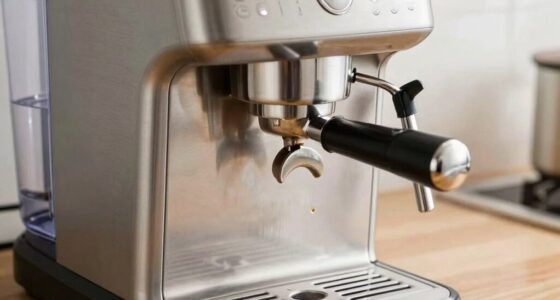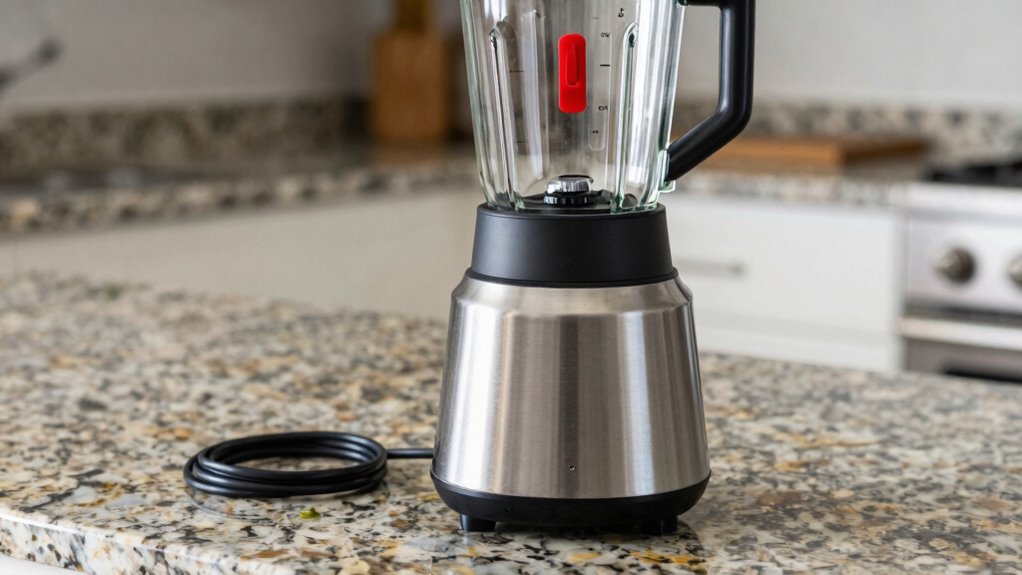

To stop your blender from walking across the counter, make sure the surface is flat and level, and clean it from any debris or sticky residues. Use non-slip pads or silicone mats under the base, or install rubber feet for more grip. Check that the blender is properly assembled and the jar is securely attached. Address motor or loose parts if wobbling persists. For more tips on stabilizing your blender, keep exploring solutions to keep it steady during use.

Get cleaning gear delivered free — and shop member deals
- Fast, free delivery on millions of items
- Access to Prime Big Deal Days deals on October 6–7
- Prime Video, Amazon Music and more included
Key Takeaways
- Place a non-slip pad or silicone mat under the blender to increase grip and prevent slipping.
- Ensure the blender is on a flat, level surface using a spirit level for accuracy.
- Tighten all jar and base connections to maintain proper alignment and stability.
- Consider attaching rubber feet or adjustable grips to the blender’s base for added traction.
- Regularly clean the base and check for worn or loose components to ensure proper functioning.
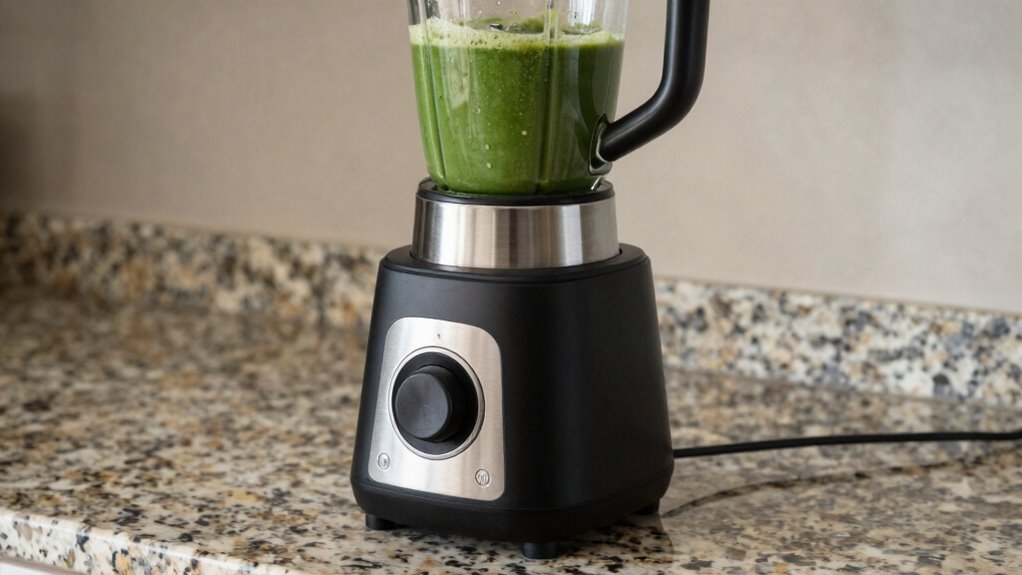
If your blender keeps sliding across the counter every time you use it, it can be frustrating and even dangerous. This issue often stems from a combination of factors, including blender motor issues or the type of countertop material you have. Understanding the root cause can help you find effective solutions to keep your blender steady during use.
First, consider the blender motor issues. Over time, the motor’s vibration can cause the base to become unstable, especially if the motor is worn or malfunctioning. Sometimes, a loose or damaged motor coupling can make the base wobble, causing the whole blender to shift. If you notice unusual noises or excessive vibration, it might be time to replace or repair the motor or its components. Regular maintenance, like tightening screws or replacing worn parts, can make a significant difference. Also, ensure that the blender’s base is clean and free of debris, as dirt or sticky residues can contribute to slipping. Additionally, motor vibration can be a key factor influencing the stability of your blender. Sometimes, the overall appliance stability can be affected by the design and weight distribution of the blender.
Worn motors or loose couplings can cause wobbling and instability during blending. Regular maintenance helps.
Next, examine the countertop material. Smooth, slick surfaces like polished granite, glass, or certain plastics tend to reduce friction, making it easier for the blender to slide. If your countertop is slippery, even a perfectly functioning blender can walk during operation. To address this, you can place a non-slip pad or silicone mat under the blender’s base. These mats increase friction and create a more stable surface, preventing unwanted movement. If you prefer a more permanent solution, consider applying rubber feet or adjustable grips to the bottom of your blender. These modifications help to anchor the appliance firmly, regardless of the countertop material. Additionally, countertop surface characteristics can influence how much a blender tends to slip during use.
Another simple tactic is to position your blender on a flat, level surface. If your counter has uneven spots or slight inclines, the blender will be more prone to walking during use. Use a spirit level or a straightedge to check and adjust the placement if necessary. Additionally, ensure the blender is properly assembled—sometimes, a loose jar or misaligned base can cause instability. Tightening the jar and ensuring it clicks into place securely can prevent wobbling during blending.
non-slip silicone mat for blender
As an affiliate, we earn on qualifying purchases.
As an affiliate, we earn on qualifying purchases.
Frequently Asked Questions
Can a Blender Walk on Different Types of Countertops?
A blender can’t walk on different types of countertops because it’s a stationary appliance. However, its stability can vary depending on the countertop material. Smooth surfaces like glass or polished stone may cause slipping, reducing stability, while textured surfaces like granite or laminate provide better grip. To prevent movement, place a damp cloth or non-slip mat under the blender, ensuring it stays steady regardless of the countertop material.
Are There Safety Concerns With Stabilizing a Moving Blender?
Yes, stabilizing a moving blender can pose safety concerns. Excessive blender vibrations might cause the appliance to tip or fall, risking injury. Additionally, if you don’t secure it properly, it could damage the countertop or create a mess. To avoid these issues, use non-slip mats or damp cloths underneath. Always guarantee the blender is on a flat, stable surface and avoid overloading it, reducing vibrations and preventing accidents.
Will Adhesive Solutions Damage My Countertop Surface?
Using adhesives might risk damaging your countertop surface if they’re too strong or not suitable for your material. Check the adhesive’s safety and compatibility with your countertop’s durability before applying. Opt for removable or gentle adhesives to prevent permanent damage. Always test a small area first, and consider alternative stabilization methods if you’re concerned about adhesive safety or surface preservation. This way, you protect your countertop while keeping your blender steady.
How Do I Prevent a Blender From Walking During High-Speed Blending?
To prevent your blender from walking during high-speed blending, picture it as a wild horse needing control. Use a counter grip by placing a damp cloth or non-slip pad underneath to absorb the vibration and anchor it firmly. This reduces blender vibration, stopping it from sliding or bouncing. Keep the blender steady by holding the base lightly, and make sure your countertop surface is clean and dry for maximum grip.
Is It Possible to Modify the Blender’s Base for Better Stability?
Yes, you can modify your blender’s base for better stability. Focus on base modification by adding weight to the bottom, which improves weight distribution and prevents movement during use. You might attach non-slip pads or place heavy objects underneath the base. These adjustments help lower the center of gravity, ensuring your blender stays firmly in place, especially during high-speed blending, making it safer and more efficient.
As an affiliate, we earn on qualifying purchases.
Conclusion
So, next time your blender starts a little dance on the counter, remember—it’s not about stopping the movement but about preventing the chaos. Ironically, by securing its base, you’re actually giving it the freedom to stay put, saving you from cleaning up a mini tornado. Who knew that a simple grip and a steady hand could turn your wandering blender into a stationary kitchen hero? Now, enjoy your smoothies without the unintended dance parties!
As an affiliate, we earn on qualifying purchases.
adjustable rubber grips for blender
As an affiliate, we earn on qualifying purchases.
As an affiliate, we earn on qualifying purchases.
Fall Picks
fall essentials
As an affiliate, we earn on qualifying purchases.