
To make one thermostat work better for your entire house, consider improving airflow and insulation to reduce temperature inconsistencies. Use dampers to direct airflow more efficiently, and set your thermostat to a consistent schedule to maintain steady temperatures. Installing a smart thermostat can also help by learning your routines and adjusting settings automatically. For more tips on optimizing your home’s climate control, keep exploring how zoning systems and smart controls can enhance your comfort and save energy.
Open a free Amazon Business account
Business pricing, bulk buying and tax-exempt orders.
As an affiliate, we earn on qualifying purchases.
Key Takeaways
- Consider installing zoning systems to divide your home into manageable temperature zones.
- Use a smart thermostat that learns your schedule and adjusts settings automatically for better efficiency.
- Place the thermostat in a central location to ensure accurate temperature readings for the entire house.
- Regularly maintain your HVAC system for optimal performance and consistent temperature control.
- Combine a single thermostat with supplemental controls like fans or portable heaters to better regulate specific areas.
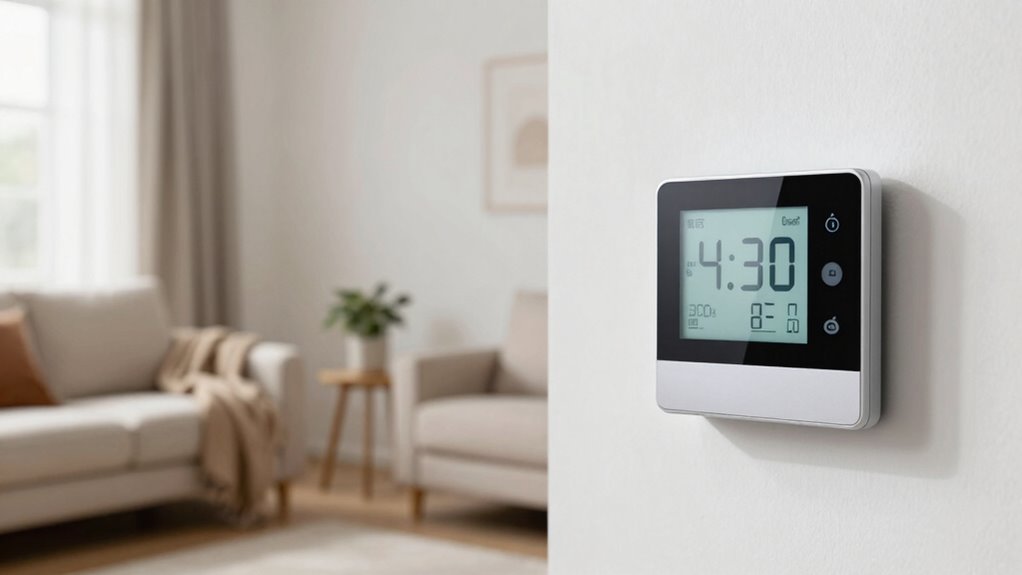
If you rely on a single thermostat to heat or cool your entire house, you might notice uneven temperatures and discomfort in some rooms. This is a common problem, especially in larger or multi-story homes, where different areas have varying heating and cooling needs. To tackle this, consider upgrading your system with zoning systems or smart thermostats. These solutions give you better control over your home’s climate, making it more comfortable and energy-efficient.
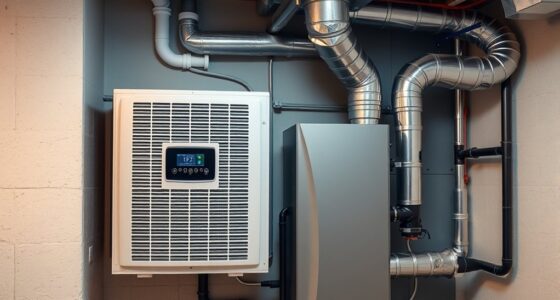
Zoning systems are a smart way to improve your home’s temperature regulation. They divide your house into separate zones, each with its own damper and sensor, allowing you to set different temperatures for each area. When properly installed, zoning systems ensure that warm air or cool air is directed only where it’s needed, reducing energy waste and eliminating hot or cold spots. You can adjust each zone independently, whether you want a warmer bedroom or a cooler living room, which leads to greater comfort overall. Additionally, zoning systems can be integrated with smart home technology to enhance automation and ease of control.
Zoning systems split your home into zones with individual controls, reducing energy waste and enhancing overall comfort.
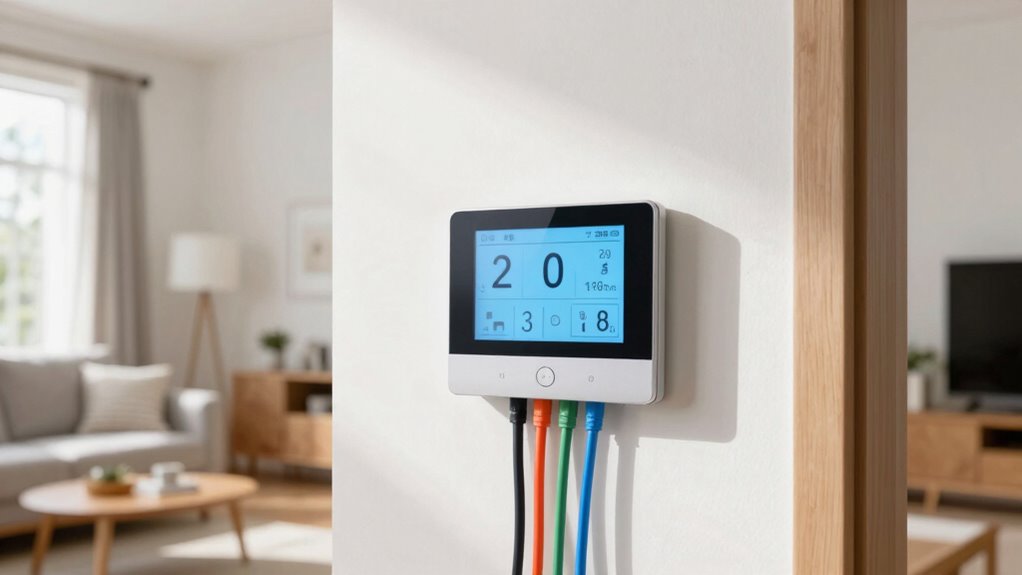
Smart thermostats also play an essential role in optimizing your home’s heating and cooling. Unlike traditional thermostats, smart thermostats learn your schedule and preferences, automatically adjusting temperatures for efficiency and comfort. They can be controlled remotely via smartphone apps, so you don’t have to get up to change settings. Many smart thermostats also integrate with home automation systems and work seamlessly with voice assistants, giving you even more control. They analyze your usage patterns and provide insights that help you save energy and reduce your utility bills. Additionally, smart thermostats can help you identify and resolve inefficiencies, further enhancing your home’s energy management. Incorporating energy-saving features into your thermostat setup can significantly boost your home’s overall efficiency.
Combining zoning systems with smart thermostats takes your home’s climate control to the next level. You can install smart thermostats in each zone, allowing you to customize temperatures precisely for different rooms or floors. This setup reduces energy consumption because you’re not overheating or overcooling unused spaces. Plus, with scheduling features, you can set your system to adapt to your daily routine, ensuring comfort when you’re home and saving energy when you’re away. Employing home automation systems can further enhance the efficiency and convenience of managing your home’s climate.
smart thermostat for whole house
As an affiliate, we earn on qualifying purchases.
As an affiliate, we earn on qualifying purchases.
Frequently Asked Questions
Can Installing a Smart Thermostat Improve Overall House Comfort?
Installing a smart thermostat can definitely improve your house’s comfort. With voice control, you can easily adjust settings without getting up, ensuring a cozy environment. Wireless connectivity allows you to control your thermostat remotely, so you can tweak the temperature from anywhere. These features help you maintain a consistent, comfortable temperature throughout your home, making your living space more enjoyable and energy-efficient.
How Often Should I Calibrate My Thermostat for Accuracy?
You should calibrate your thermostat about once a year to guarantee accuracy. Proper thermostat placement, like avoiding direct sunlight or drafts, helps maintain consistent readings. Regular calibration keeps your heating and cooling system running efficiently and prevents temperature discrepancies across rooms. If you notice uneven heating or cooling, check your calibration more often. Consistent calibration frequency ensures your thermostat accurately reflects your desired comfort level, saving energy and boosting overall home comfort.
Is It Possible to Zone Different Areas With One Thermostat?
It’s possible to zone different areas with one thermostat, but zoning challenges can arise, especially if your thermostat isn’t compatible with zoning systems. You’ll need a multi-zone or smart thermostat designed for zoning, which can control multiple areas independently. Check your thermostat’s compatibility first. If it’s not compatible, consider upgrading to a zoning-capable thermostat or adding zone controls to better manage temperature differences across your house.
What Are Signs My Thermostat Is Malfunctioning?
Ever wondered if your thermostat’s acting up? Signs include inconsistent heating or cooling, frequent cycling, or unexpected temperature swings. Check its placement—if it’s near drafts or direct sunlight, readings could be skewed. Also, poor battery performance can cause malfunctioning; if the display dims or the system doesn’t respond, replace the batteries. Address these issues promptly to guarantee your thermostat accurately controls your home’s climate.
Can a Thermostat Affect Energy Bills Significantly?
Yes, your thermostat can markedly influence your energy bills. Poor placement or outdated units lead to inefficient heating and cooling, increasing costs. To save money, consider energy-efficient upgrades like a programmable thermostat, which adjusts settings based on your schedule. Proper thermostat placement is vital; install it away from drafts, direct sunlight, or heat sources to guarantee accurate readings and peak energy use throughout your home.
As an affiliate, we earn on qualifying purchases.
Conclusion
By optimizing your thermostat settings and considering zoning solutions, you can make one thermostat effectively heat or cool your entire house. Did you know that using a programmable thermostat can save you up to 10% annually on energy costs? This shows how small adjustments can lead to big savings and improved comfort. So, take control of your system, customize your settings, and enjoy a more efficient, comfortable home without the need for multiple thermostats.
As an affiliate, we earn on qualifying purchases.
home zoning system with smart controls
As an affiliate, we earn on qualifying purchases.
As an affiliate, we earn on qualifying purchases.
Fall Picks
fall essentials
As an affiliate, we earn on qualifying purchases.