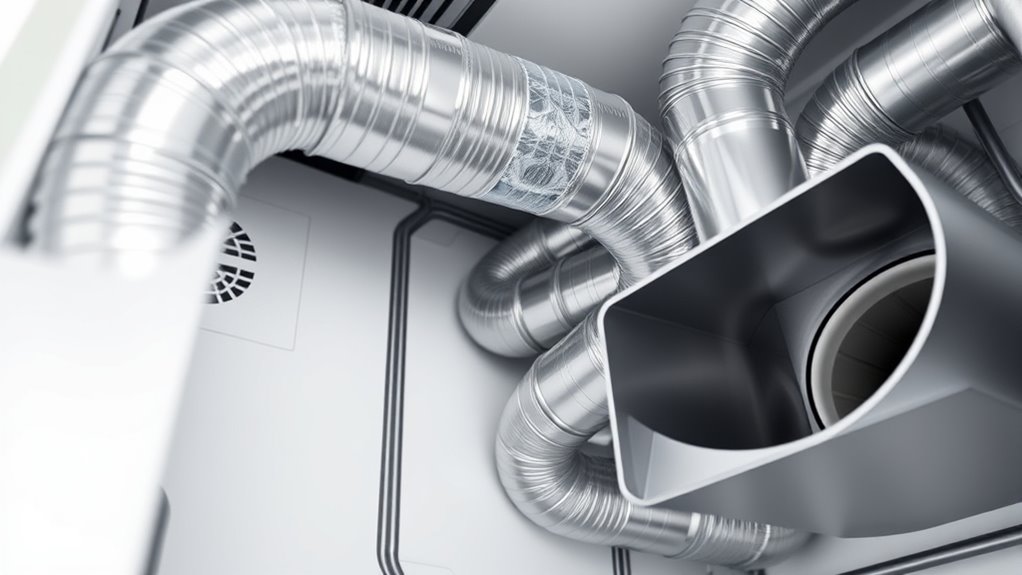

Proper duct sizing and airflow guarantee your heating and cooling systems deliver the right amount of conditioned air to each room, keeping temperatures consistent and comfortable. When ducts are correctly sized, your system works efficiently, saving energy and reducing wear on equipment. It also prevents noise and hot or cold spots caused by improper airflow. If you want to understand how correct duct design can improve your home’s comfort and efficiency, keep exploring the details.
Key Takeaways
- Proper duct sizing ensures balanced airflow, preventing hot or cold spots and maintaining consistent indoor temperatures.
- Correct airflow reduces energy consumption by optimizing HVAC system efficiency and preventing unnecessary cycling.
- Well-sized ducts minimize noise issues and airflow problems, enhancing overall comfort and system performance.
- Proper duct design reduces air leakage and improves sealing, leading to better indoor air quality and energy savings.
- Correct airflow supports longer HVAC system lifespan by reducing wear, preventing damage, and maintaining steady operation.

Proper duct sizing and airflow are essential for an efficient and comfortable heating and cooling system. When your ducts are correctly sized, they deliver the right amount of air to each room, ensuring consistent temperatures throughout your home. If the ducts are too small, your system has to work harder to push air through, which can lead to increased energy consumption and uneven heating or cooling. Conversely, oversized ducts might cause noise issues and improper airflow, making your system less effective. Achieving the proper duct size is crucial for maintaining a balanced airflow, which directly impacts your comfort and energy bills.
Proper duct sizing ensures efficient airflow, comfort, and energy savings in your heating and cooling system.
One common problem that arises from improper duct sizing is duct leakage. When ducts are too small or poorly sealed, air escapes before reaching its destination. Duct leakage not only wastes energy but also disrupts the airflow balance, causing some rooms to be too hot or cold. Over time, this inefficiency can increase your heating and cooling costs while reducing your system’s lifespan. To prevent this, it’s vital to ensure your ducts are sealed tightly and that any leaks are promptly repaired. Proper insulation and sealing can significantly minimize duct leakage, helping your system run smoothly and efficiently.
Maintaining airflow balance is another key reason why correct duct sizing matters. When airflow isn’t balanced, some rooms won’t get enough conditioned air, while others may receive too much. This imbalance can lead to hot spots or cold drafts, making your home uncomfortable. Properly sized ducts help distribute air evenly, ensuring each room maintains a consistent temperature. Achieving this balance often requires professional assessment, including measuring airflow and adjusting dampers or adding vents as needed. When airflow is balanced, your system operates more efficiently, reducing strain on your equipment and lowering your energy bills.
Inadequate duct sizing and poor airflow management can cause your HVAC system to cycle on and off more frequently, increasing wear and tear. This not only shortens the lifespan of your equipment but also results in higher maintenance costs. Correct duct sizing helps your system run continuously at ideal levels, providing steady comfort without overworking your unit. Additionally, a well-designed duct system enhances indoor air quality by preventing stagnant air pockets and ensuring fresh air circulates properly. Proper duct sizing and airflow are also vital for preventing duct leakage, which can compromise system efficiency and comfort. When you prioritize proper duct sizing and airflow, you’re investing in a system that delivers reliable comfort, saves energy, and lasts longer.
Frequently Asked Questions
How Often Should Duct Systems Be Inspected for Optimal Performance?
You should inspect your duct system at least once every 3 to 5 years to maintain ideal performance. Regular duct cleaning helps prevent dust buildup and enhances airflow, while system upgrades can improve efficiency. If you notice uneven heating or cooling, increased energy bills, or strange noises, it’s a sign to get an inspection sooner. Staying proactive ensures your system runs smoothly, saving you money and boosting comfort.
What Signs Indicate Duct Sizing Issues in My HVAC System?
You might notice damp air or uneven heating, which often signals duct sizing issues. When ducts are too small, airflow struggles, causing hot or cold spots and moisture buildup. Conversely, oversized ducts can lead to noise and inefficient cooling. If you experience inconsistent temperatures or increased humidity, it’s a sign your duct system requires a professional inspection. Addressing these signs ensures your system runs smoothly, saving energy and boosting comfort.
Can Improper Airflow Affect Indoor Air Quality?
Yes, improper airflow can negatively affect your indoor air quality and ventilation efficiency. When airflow is restricted or uneven, it can cause dust, mold, and pollutants to accumulate, leading to stuffy or stale air. Poor ventilation also prevents fresh air from circulating properly, which can worsen allergies and respiratory issues. Ensuring proper duct sizing and airflow helps maintain clean, healthy air and improves overall comfort in your home.
Are There Energy Savings From Correctly Sized Ductwork?
Yes, correctly sized ductwork boosts your energy efficiency and saves you money. When ducts are properly designed, your HVAC system runs smoothly, reducing unnecessary energy use and lowering utility bills. You’ll experience better comfort, consistent airflow, and less strain on your equipment. Proper duct sizing ensures your system operates at peak performance, leading to significant cost savings over time while maintaining a comfortable indoor environment.
How Does Duct Material Impact Airflow Efficiency?
You’re really on the right track when considering duct material, as it directly impacts airflow efficiency. Different materials like flexible duct, sheet metal, or insulated ducts each offer varying resistance levels. Choosing the right duct material guarantees smooth airflow, minimizes energy loss, and keeps your system running efficiently. In the long run, it’s like hitting two birds with one stone—saving energy and boosting comfort without extra effort.
Conclusion
When you get your duct sizing right, you improve your home’s comfort and efficiency. Did you know that improperly sized ducts can increase energy bills by up to 30%? That’s a significant jump just because of airflow issues. So, take the time to guarantee your ducts are correctly sized and balanced. It’ll keep your home comfortable, save you money, and keep your system running smoothly for years to come.