To keep dust down during home projects, use HEPA air purifiers in work areas to trap airborne particles. Seal gaps around windows, doors, and vents with weatherstripping or caulk to prevent dust from spreading. Cover work zones with plastic sheeting or drop cloths secured tightly with painter’s tape, and choose dust-reducing tools to generate less debris. Planning your containment strategies carefully can make a big difference—continue below to discover more effective dust control tips.

Get cleaning gear delivered free with Prime
- Fast, free delivery on millions of items
- Prime Video, Amazon Music and more included
- Member-only deals all year
Key Takeaways
- Use HEPA-filter air purifiers in work and adjacent rooms to trap airborne dust and improve air quality.
- Seal gaps around windows, doors, and vents with weatherstripping or caulk to prevent dust migration.
- Contain the project area with plastic sheeting and drop cloths secured with painter’s tape to limit dust spread.
- Select dust-reducing tools that generate minimal debris and dust at the source.
- Plan workspace layout and contain the area to facilitate easier cleanup and maintain a dust-free environment.
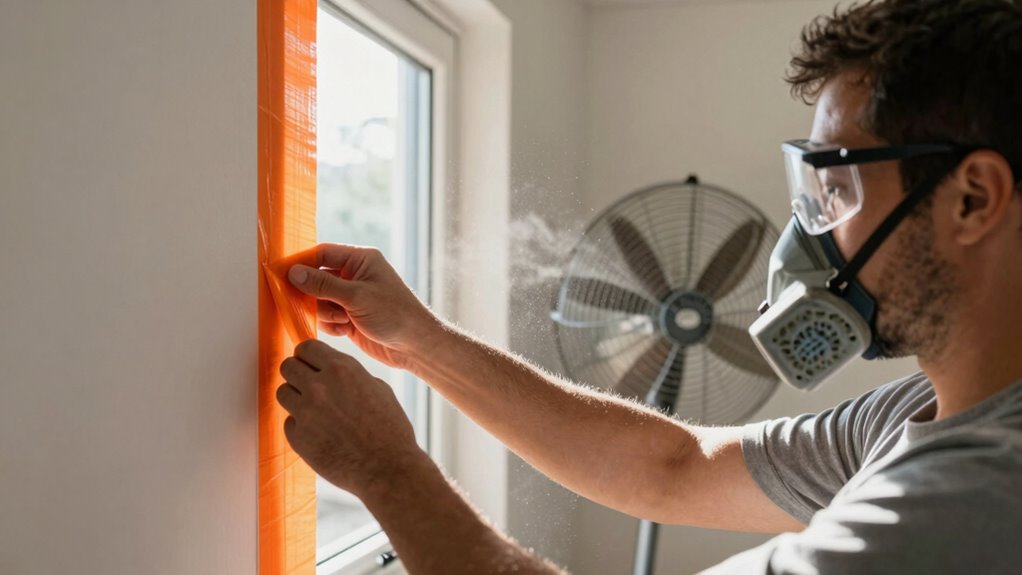
When tackling home projects, dust can quickly become a major nuisance — but you don’t have to let it take over your space. The key is to control the dust at its source and prevent it from spreading throughout your home. One effective method is to use air purifiers. These devices can greatly reduce airborne dust, allergens, and other particles, making the air safer to breathe during and after your project. Place air purifiers in the rooms where you’ll be working and in adjacent spaces to catch dust that escapes. Look for models with HEPA filters, as they’re particularly good at trapping tiny particles, ensuring cleaner air and less cleanup afterward.
Use HEPA-filter air purifiers in work and adjacent rooms to reduce dust and improve air quality during projects.
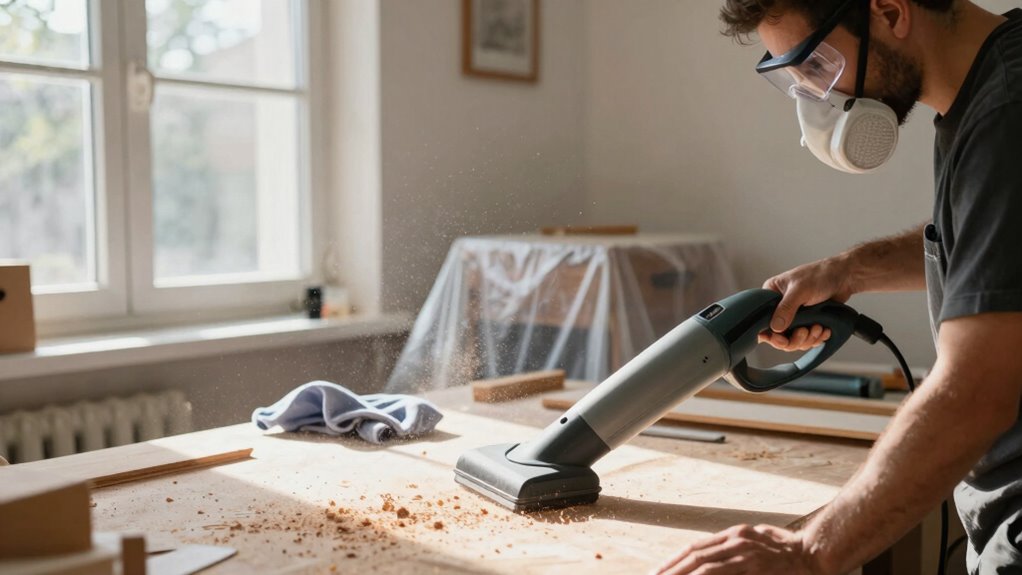
In addition to air purifiers, sealing gaps is essential. Dust always escapes through small openings around windows, doors, and vents. Before starting your project, take the time to seal these gaps with weatherstripping or caulk. This simple step creates a barrier that minimizes dust migration to other parts of your house. When sealing gaps, pay special attention to areas near the work zone, especially if you’re sanding, cutting, or demolishing. It’s also wise to cover vents and registers with plastic or painter’s tape to prevent dust from spreading through your HVAC system. Using dust containment** techniques further minimizes the spread of debris. Incorporating proper containment strategies can make a significant difference in maintaining a clean and dust-free environment. Additionally, choosing dust-creating tools** that produce minimal debris can greatly reduce the amount of dust generated during your project. Implementing these methods can help maintain a healthier indoor environment and reduce cleanup time.
Another practical tip is to contain your work area as much as possible. Use plastic sheeting or drop cloths to create a barrier around the project zone. Secure these coverings tightly with painter’s tape, especially at the edges, to prevent dust from sneaking underneath. This containment not only helps keep dust localized but also makes cleanup easier once you finish. Properly planning your workspace and using dust suppression techniques can further increase the effectiveness of your dust control efforts.
HEPA air purifier for dust removal
As an affiliate, we earn on qualifying purchases.
As an affiliate, we earn on qualifying purchases.
Frequently Asked Questions
Can I Use Air Purifiers to Reduce Dust During Projects?
Yes, you can use air purifiers to reduce dust during projects. Make sure to choose an air purifier with a HEPA filter, which effectively captures dust particles of all sizes. Regular air purifier maintenance, like cleaning or replacing filters, is essential for maximum performance. Keep in mind that smaller dust particles can stay airborne longer, so using an air purifier helps improve air quality and keeps dust levels down during your home projects.
What Are the Best Personal Protective Equipment for Dust Protection?
Wearing personal protective equipment is like putting on armor for your health. You should wear respiratory masks to filter out dust particles and protect your lungs, and protective goggles to shield your eyes from airborne debris. These items are essential for safety during home projects involving dust, ensuring you breathe easier and avoid irritation or injury. Always choose well-fitting gear for maximum protection and comfort.
How Often Should I Clean My Vacuum Filter During Projects?
You should clean your vacuum filter regularly during projects—about once a week or whenever you notice a decline in suction. Consistent vacuum maintenance guarantees it runs effectively and keeps dust from spreading. If the filter looks worn or damaged, replace it promptly to maintain peak dust control. Frequent filter replacement and cleaning help you stay ahead of dust buildup, making your project safer and cleaner overall.
Are There Eco-Friendly Methods to Control Dust?
Yes, you can use eco-friendly methods like natural remedies and dust barriers to control dust. Set up dust barriers using reusable plastic sheets or tarps to contain particles. Natural remedies, such as placing bowls of vinegar or baking soda nearby, help absorb dust and odors. Regularly cleaning and ventilating your space also reduces dust buildup. These eco-friendly steps keep your environment healthier while minimizing environmental impact during home projects.
How Does Humidity Affect Dust Levels During Home Projects?
Humidity control plays a crucial role in dust suppression during home projects. Higher humidity levels help keep dust particles from becoming airborne, reducing overall dust levels. By maintaining ideal humidity, you make dust less likely to circulate and settle on surfaces. Use a humidifier to add moisture to the air if needed, especially in dry environments. This simple step can greatly improve air quality and make your project safer and cleaner.
weatherstripping for windows and doors
As an affiliate, we earn on qualifying purchases.
As an affiliate, we earn on qualifying purchases.
Conclusion
By taking these simple steps, you’ll turn your home project into a breeze rather than a dust storm. Think of it like guiding a gentle river—controlling the flow keeps chaos at bay. With proper ventilation, barriers, and cleanup, you can keep dust from spreading like wildfire. So, roll up your sleeves and tackle your project confidently, knowing you’re the captain steering clear of a dusty disaster. Your clean, dust-free home is just a few smart moves away!
plastic sheeting drop cloths for dust containment
As an affiliate, we earn on qualifying purchases.
As an affiliate, we earn on qualifying purchases.
As an affiliate, we earn on qualifying purchases.
Fall Picks
fall essentials
As an affiliate, we earn on qualifying purchases.