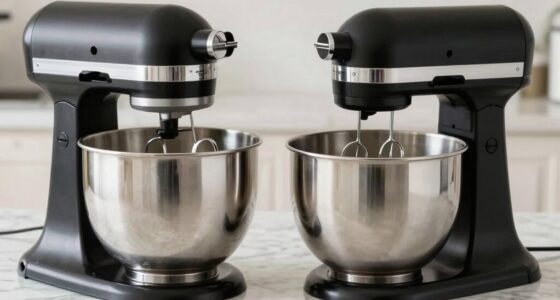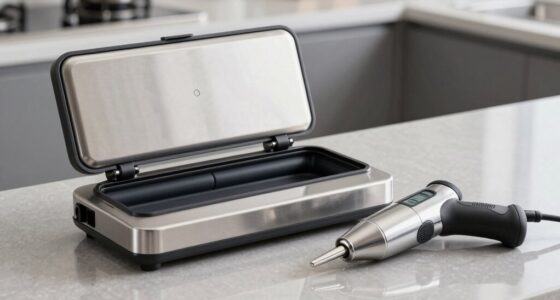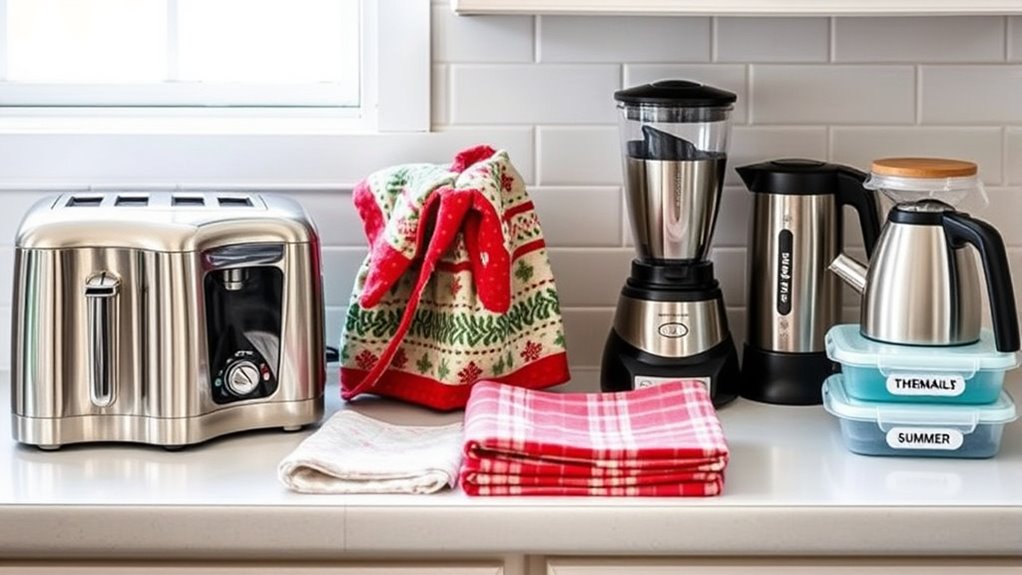

To prepare your small appliances for winter and summer, start by cleaning dust, debris, and filters to improve efficiency. Check cords, plugs, and switches for damage, unplug unused devices, and store them in cool, dry spots away from moisture and extreme temperatures. Use covers or airtight containers for long-term storage, and wrap cords neatly. Keep your appliances safe and ready year-round—keep going for detailed tips on seasonal prep.
Key Takeaways
- Clean dust, debris, and filters from small appliances to improve efficiency and prevent fire hazards before seasonal changes.
- Inspect cords and plugs for damage, and wrap cords neatly to avoid fraying or electrical issues.
- Store unused appliances in dry, cool, and dust-proof containers or covers to prevent moisture and corrosion.
- Unplug appliances when not in use for extended periods to save energy and ensure safety.
- Perform seasonal checks on heating or cooling functions to ensure optimal performance and safety readiness.
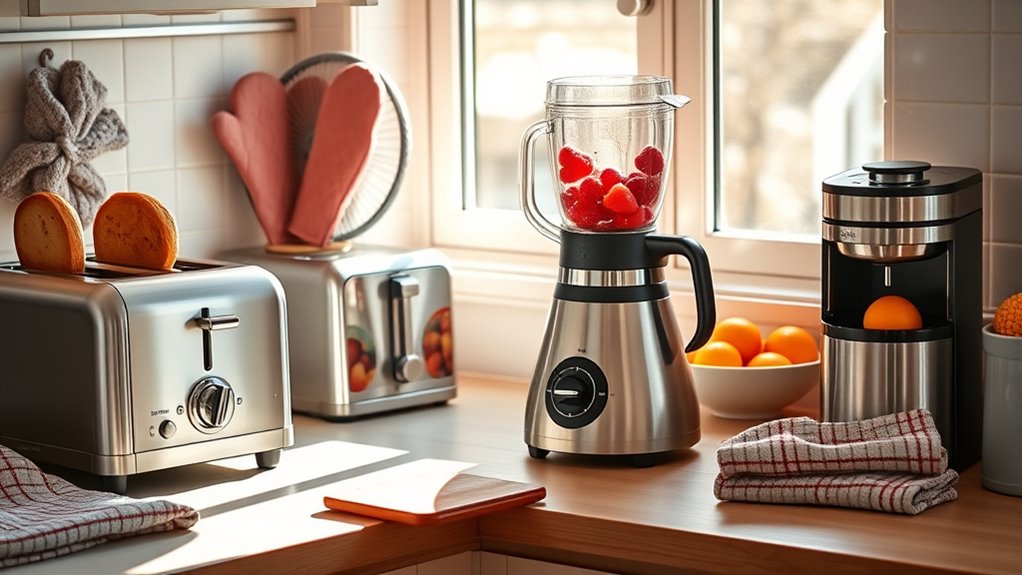
Have you ever wondered if your small appliances are ready to handle the changing seasons? As temperatures shift, your appliances need a little extra attention to stay efficient and safe. Preparing your small appliances for winter and summer isn’t just about cleaning; it’s also about guaranteeing energy efficiency and proper storage. When you take the time to prep now, you’ll save money on energy bills later and extend the lifespan of your devices.
Preparing your small appliances for seasonal changes saves energy, extends lifespan, and ensures safe, efficient operation year-round.
In the summer, many appliances like fans, humidifiers, and even small kitchen gadgets work harder. To keep them running smoothly, start by cleaning dust and debris from vents, blades, and filters. Dust buildup can hinder airflow, making appliances less energy-efficient and causing them to work harder, which increases energy consumption. Check power cords and plugs for damage, because faulty wiring can be a safety hazard and reduce efficiency. When storing appliances that aren’t in use during summer, follow good storage tips: keep them in a cool, dry place, and avoid stacking heavy objects on top to prevent damage. Using airtight containers or covers can help protect them from dust and humidity, which can cause corrosion or mold. This not only prolongs their lifespan but also guarantees they’re ready to go when you need them again. Additionally, inspecting and maintaining appliance safety features can prevent accidents and ensure optimal operation.
Come winter, the demands on your appliances change. Space heaters, electric blankets, and other heat-producing devices can become vital during cold months. Before turning them on, inspect cords and switches for any signs of wear. Clean heating elements to prevent dust buildup, which can reduce efficiency and even pose fire risks. For appliances that rarely get used during winter, like certain small kitchen gadgets, storing them properly becomes essential. Use designated storage spaces that are dry and free from extreme temperatures. Proper storage tips include wrapping cords neatly to prevent fraying and keeping appliances in dust-proof containers to avoid dirt accumulation. If you’re not planning to use an appliance for a long period, consider unplugging it entirely to save energy and prevent electrical hazards. When storing appliances, avoid placing them directly on cold floors or in damp areas, as moisture can cause corrosion and reduce efficiency over time.
Preparing your small appliances for seasonal changes is a simple yet effective way to guarantee they operate efficiently and last longer. By focusing on cleaning, checking for damage, and storing them properly, you optimize their energy efficiency and keep them safe from seasonal wear and tear. Taking these small steps now means you’ll enjoy their performance year-round, without unexpected breakdowns or high energy bills. So, get into the habit of seasonal prep—your appliances will thank you, and so will your wallet.
Frequently Asked Questions
How Often Should I Inspect My Appliances Seasonally?
You should inspect your appliances seasonally, ideally every three to six months, to guarantee they’re functioning properly. Regular seasonal maintenance helps catch issues early, preventing costly repairs and extending appliance longevity. During inspections, check for dust buildup, loose cords, and any signs of wear. Staying proactive with these inspections keeps your appliances in top shape year-round, saving you time and money while ensuring safe, efficient operation.
Are There Specific Storage Tips for Fragile Appliances?
To safeguard fragile appliances, use sturdy storage containers that cushion them from impacts. Always clean and dry appliances thoroughly before storing to prevent mold and damage. Wrap delicate parts in bubble wrap or soft cloths for added protection. Store appliances in a cool, dry location away from direct sunlight. Proper appliance protection ensures they stay in good condition, making them easier to use when you need them again.
Can I Leave Appliances Plugged in During Extreme Weather?
You shouldn’t leave appliances plugged in during extreme weather, as power surges can damage them. To prevent this, unplug your small appliances when not in use, especially during storms or heatwaves. Incorporate appliance maintenance tips like using surge protectors and avoiding overloading circuits. Doing so helps protect your appliances from power surge prevention issues and extends their lifespan, ensuring they stay safe and functional through all weather conditions.
What Safety Precautions Should I Take When Cleaning Appliances?
Your appliances are more delicate than a spider’s web, so you must prioritize appliance electrical safety when cleaning. Always unplug before cleaning, and avoid submerging electrical parts. Use cleaning product precautions—stick to gentle, non-abrasive cleaners, and keep liquids away from outlets. Carefully wipe surfaces with a damp cloth, and never force parts apart. These steps protect you and extend your appliances’ lifespan, ensuring safe, worry-free use.
How Do I Prevent Mold and Mildew in Stored Appliances?
To prevent mold and mildew in stored appliances, you should regularly perform dehumidifier maintenance to keep moisture levels low. Make certain appliances are thoroughly cleaned and dried before storing. Use appliance waterproofing methods, like sealing gaps or adding moisture absorbers, to protect against humidity. Store appliances in a cool, dry place with good ventilation. These steps help keep mold and mildew at bay, extending your appliances’ lifespan.
Conclusion
As you prepare your small appliances for winter and summer, you’re tending to the seeds of comfort and efficiency you plant each season. Just like a gardener shields delicate blooms from harsh weather, your careful storage protects your tools, ensuring they’ll bloom again when needed. Embrace this seasonal ritual as a symbol of your nurturing spirit—trusting that with each preparation, you’re cultivating a cozy, functional home ready to flourish year-round.